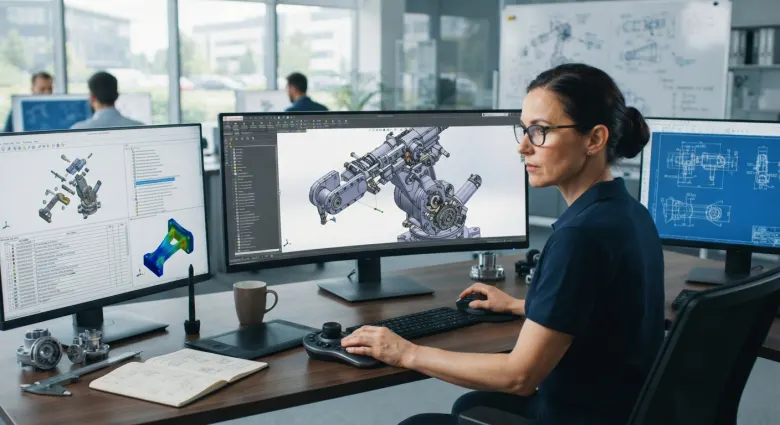
Engineering organizations frequently exchange 3D models between different design, manufacturing, analysis, and visualization applications. Because these systems may rely on different file formats, moving data from one environment to another can require specialized tools. A dependable cad translator can simplify this process by helping teams convert models into formats that can be used by other engineering applications.
Effective CAD data translation is about more than making a file readable. Engineers may need to preserve important geometry, assembly information, model properties, and other data during the transfer. A well-planned translation workflow can therefore improve collaboration while reducing the need to recreate existing models.
Why CAD Data Translation Is Important
Different engineering applications are often selected for specific tasks. One system may be used for mechanical design, another for simulation, and another for manufacturing preparation. Suppliers and customers may also use their own preferred CAD platforms.
When these systems cannot directly exchange native files, translation becomes necessary. Without a reliable process, engineers may spend considerable time repairing imported models or rebuilding geometry manually.
CAD translation provides a practical way to connect these different environments. It allows organizations to exchange design information without requiring every participant to use the same software.
Working With Common Engineering Formats
Engineering data can be stored in proprietary formats tied to specific applications or in neutral formats designed for broader interoperability. Both types can play an important role in product development.
Native formats may contain application-specific design information that is useful when continuing work in the original software. Neutral formats can be more convenient when sharing models between different applications.
A translation workflow should account for the formats used by the organization and its external partners. Understanding the expected input and output formats helps teams select suitable conversion technology.
Preserving Geometry During Translation
Geometry is one of the most important aspects of a CAD model. Translation should produce a representation that accurately reflects the source model for its intended downstream use.
Engineers should pay attention to solid bodies, surfaces, curves, complex features, and detailed components. A basic model may translate without noticeable issues, while a complicated design can expose differences between the source and destination systems.
For this reason, testing should include representative engineering models rather than only simple sample files.
Handling Assemblies and Components
Many products consist of assemblies containing numerous components. Translation can become more complicated when these components have relationships or are arranged in specific structures.
Teams should verify that important components are available after translation and that the resulting assembly remains useful in the destination application. Large assemblies should also be tested for processing performance because they can require more computing resources.
Maintaining a clear model structure can make translated data easier for engineers to inspect and continue working with.
What Information Should Be Preserved?
Geometry is not always the only important information in a CAD file. Models can contain names, identifiers, properties, material details, and other attributes.
Before choosing a translation solution, teams should determine which information is essential to their workflow. This makes it easier to evaluate whether a translated model meets practical requirements.
Some application-specific information may not have a direct equivalent in another format, so expectations should be established before the conversion process begins.
Validation After Translation
Checking the translated model is an important part of data exchange. Engineers can compare critical geometry and dimensions with the original model and inspect assembly components for completeness.
The appropriate level of validation depends on how the model will be used. Models intended for manufacturing or further engineering development may require more detailed checks than models used primarily for visualization.
Keeping the original source file also provides a useful reference if differences are discovered later.
Creating a Reliable Translation Workflow
Organizations can improve CAD data exchange by creating repeatable procedures for file preparation, translation, validation, and storage. For frequent conversions, automation can further reduce manual work and help maintain consistent processing.
A capable CAD translation solution should be evaluated according to format support, geometry handling, assembly processing, metadata requirements, performance, and integration possibilities.
When these factors are considered together, CAD data translation can become a dependable part of the engineering workflow. Instead of treating incompatible file formats as a barrier, teams can use structured translation processes to connect different software environments and keep valuable design information moving throughout the product development lifecycle. CAD Model Converter for Geometry, Metadata and Model Attributes.
#3DModeling #BRep